16 Advanced Codebase Map Features for Claude Code Users

A codebase map for Claude Code is the missing tool for developers who rely on AI but are tired of duplicate code, blind spots, and brittle refactors.
We’re breaking down 16 advanced features that turn your GitHub repo into a reliable graph your agent can query for architecture, risk, and reachability.
If you want deterministic results and fewer surprises in agent-driven development, here’s what actually works.
1. Graph-Backed Codebase Map You Can Query in Claude Code
A modern codebase needs structure, speed, and context. Relying on scattered files or reading raw code in chunks wastes your time. That’s where a graph-backed map cuts through the chaos. With Pharaoh, you get a Neo4j-powered architecture map that unlocks deterministic lookups for every AI agent running Claude Code. No more token-heavy scrapes. No lost minutes. Only precision.
What Happens When You Query the Map:
- Instantly see how every file, function, and endpoint fits in the broader repo architecture.
- Visual module maps include LOC counts, dependency graphs with edge weights, hot-file overlays, and complete HTTP endpoint registries—all accessible at millisecond speed with zero token cost after the initial parse.
- Ideal for new repo onboarding, sprint planning, or multi-file edits. This clarity is your blueprint.
- The knowledge graph connection ensures reproducibility. Each query returns hard facts, never guesses.
Fast, deterministic insights mean your AI agent delivers fewer surprises and less duplicate code.

2. Deep Module Profiles in 2K Tokens for Targeted Refactors
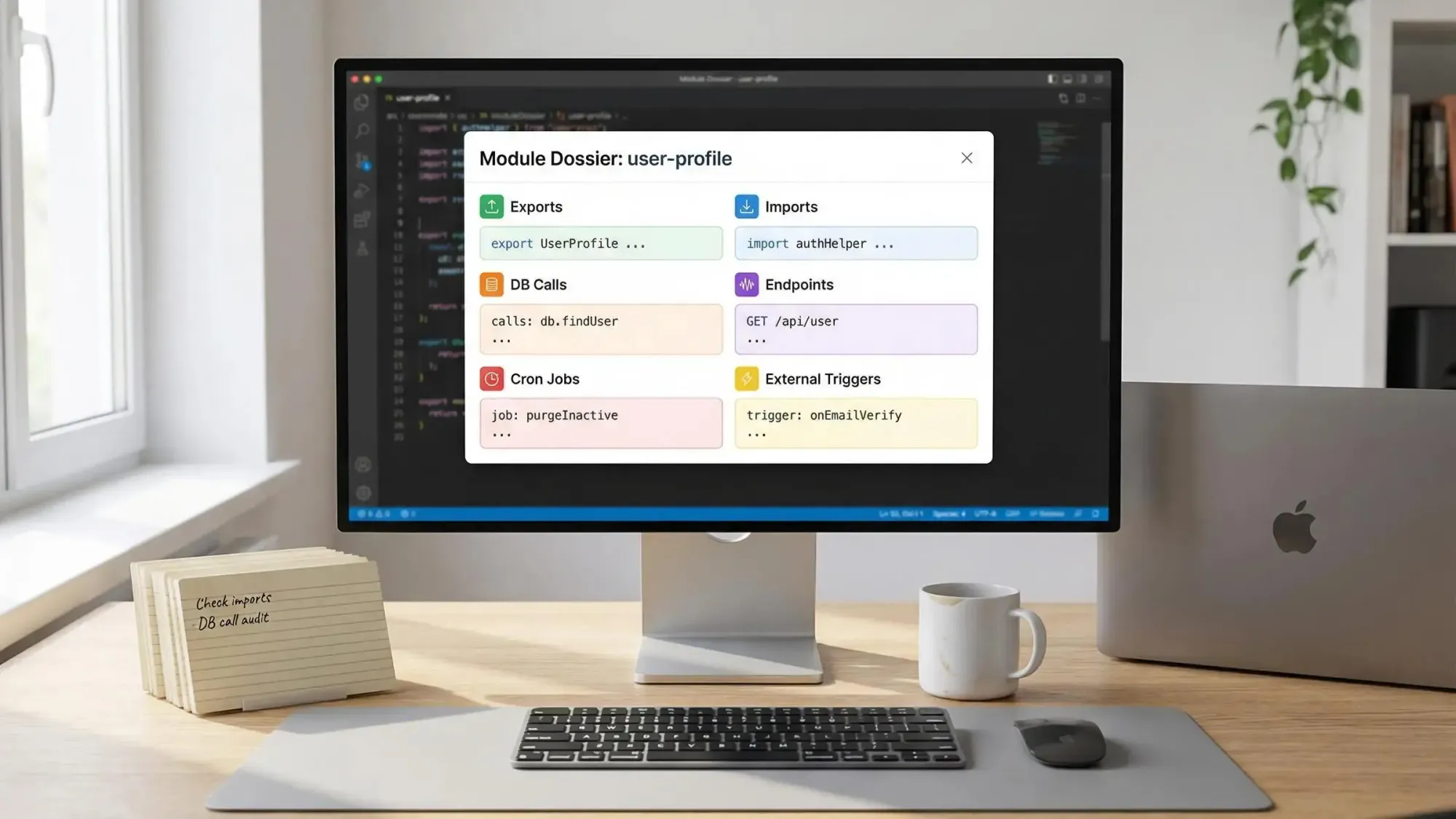
Most developers get swamped by infinite scrolling or noisy context windows. A direct, compact module profile brings order to the mess. We give you a 2K-token module dossier that summarizes every key fact: exports, imports, DB calls, endpoints, cron jobs, and external triggers.
Who Wins with This:
- Solo founders who want quick scoping before a major change.
- Teams prepping PRDs or mapping cross-module risks.
- Any developer looking to shrink 40K tokens of context into one concise deep dive that surfaces relationships, not just keywords.
Cut context sprawl. The Pharaoh dossier points out structural boundaries and exposes both code intent and hidden risk.
3. Function Search That Resolves Re-exports and Barrel Files
Barrel files, re-exports, and aliases can hide key utilities. Relying on grep or glob patterns is a recipe for duplicating helpers or missing key functions. Our code map powers a global function search that dives through re-exports and aliases.
Concrete Outcomes
- Prevents adding duplicate helpers, formatters, or validators because you instantly discover existing utilities, their original files, line numbers, async status, and complexity.
- Perfect for vetting before you commit a new utility or call helper functions in Claude Code. No more manual file spelunking.
- Limit, filter, and refine results quickly to keep your agent’s context sharp and uncluttered.
4. Transitive Blast Radius Before Any Rename, Delete, or Refactor
The scariest bugs show up two or three hops away from what you just changed. Developers need proof of risk, not hunches. Running blast radius with our graph-backed map gives you a real-time, up-to-5-hop assessment that groups impacts by module and lists every endpoint, cron, or DB interaction touched.
- Every planned edit gets a preflight risk report. No surprises.
- AI agents can trigger these checks before suggesting code changes. This keeps multi-file edits safe and actionable.
- Each output includes explicit risk levels and full file paths, so you always know where to look.
Smart preflight means less late-night debugging and more stable releases.
5. Module Dependency Tracing With Circular Detection
When codebases grow, dependency tangles sneak in. Circular dependencies grind teamwork and create hidden risk. Module dependency tracing shows you both direct and transitive paths between modules, flags circular relationships, and calls out shared dependencies.
Why do our users love this?
- You see exactly how module A affects module B, including every step.
- Perfect for breaking cycles, scoping domain extractions, or weighing package changes.
- File-level hints miss the big picture. The module graph brings clarity. Use the output to structure smarter multi-file agent edits.
6. Production Reachability From Entry Points
You need confidence that code paths matter in production. Phantom code chains or dead endpoints only slow you down. Production reachability traces every exported function back to concrete entry points like HTTP endpoints, scheduled jobs, event listeners, CLI commands, and even MCP integration tools.
Best Uses:
- Post-implementation audits catch orphaned or test-only paths before PR merge.
- Claude Code users auto-check reachability as part of task completion.
- Each result includes the concrete call chain, surfacing wiring issues fast.
7. Dead Code Detection That Balances Graph and Text Evidence
Dead code creeps in quietly. Static analyzers can flag smells, but few tools combine structural reachability with cross-reference evidence. Our dead code detection uses both, tiering results into Dead, Likely Dead, and Alive Not Reported.
- Practical: Get safe-to-delete candidates with full evidence chains for team review.
- Feed those results directly into cleanup agents, ensuring associated tests stay green.
- This goes deeper than line-level static checks—it finds unreachability at the architectural level.
Balanced, evidence-backed insights mean every cleanup leaves your repo leaner and safer.
8. Vision Gaps Between PRDs and the Code You Actually Have
PRDs and specs are only as strong as their follow-through. Reality gaps cause tech debt, drifting requirements, or hidden risk. Our dual-list tool unveils both “specified but never built” features and “built but never documented” complex code.
- Turns high-level plans into actionable, executable backlogs.
- Surfaces risky or undocumented logic so you can assure tests and docs are in place.
- As a workflow: Claude Code agents can instantly scan for vision gaps, propose fixes, and anchor effort to specs, not just code snippets.
9. Vision Docs Index for Design Intent and Implementation Status
Keeping code and intention in sync matters to high-performing teams. Our Vision Docs Index catalogs every CLAUDE.md, PRD, skill spec, and roadmap. See every file, its section IDs, and exactly which code implements which design.
- Onboard quickly and align new work without tab overload.
- Run this before big changes or team handoffs for architectural coherence.
- Claude Code can pair spec context with live module data to drive sharper, more aligned change plans.
A well-indexed design-to-code connection stops drift. It builds discipline and boosts long-term shipping speed.
10. Consolidation Opportunities Across Modules
Every legacy repo hides messy clusters—parallel consumers, copy-paste DB routines, dueling validators, or signature twins. These are slow leaks for productivity. Pharaoh’s codebase map spots them for you.
- See clusters of duplication like competing DB access functions and fan-in modules.
- Get instant pointers to merge similar logic, slash maintenance, and cut surface area.
- Best fit: Older projects, legacy-laden codebases, teams handling repeated integrations.
- Let Claude Code propose a clean merge, with test and import updates wired up from the start.
This clarity saves you hours. It builds the foundation for code that scales with your makers.
11. Cross-Repository Audit for Shared and Duplicated Code
Duplicated logic across repos threatens maintainability and security. You need full-visibility scans, not just string matches. The cross-repo audit finds exact and fuzzy function matches, even across module lines and environment variable usage.
What You Gain:
- Uncover where teams forked logic instead of sharing, and highlight diverged implementations for targeted fixes.
- Filter for exported-only functions, reducing noise and showing the bigger picture on library extractions.
- Ideal for monorepo planning, building shared packages, or hardening security reviews.
- With Pharaoh, proof lives at the function and structure level—not just in lines of code.
Get confidence when consolidating or splitting codebases. Drive clarity and reduce risk.
12. Regression Risk Scoring to Focus Review Energy
You juggle speed and safety every day. But review energy must go where it counts. Our regression risk scoring blends complexity, live usage, file churn, and downstream call chains, giving every function a 0 to 1 risk rank.
Here’s how to leverage this:
- Instantly see which functions demand deep review.
- Direct Claude Code to generate tests only where risk is highest—no wasted cycles.
- Plan safe rollout steps for at-risk changes, instead of flying blind.
Objective, data-backed risk means no more “gut-feel” reviews. Move from guesswork to discipline.
13. Test Coverage Hotspots by Module
Not all test gaps matter equally. Focus on weak points that drive real-world headaches. With a per-module test map, you’ll see where your code’s exposed.
Hotspot Highlights
- Surface high-complexity, high-risk functions that lack test companions. Jump right to what matters.
- Prioritize review and test writing in “hot” modules before refactoring or shipping a release.
- Use this weekly for code health—with coverage prioritized by risk, not checkbox.
This isn’t about aiming for 100 percent coverage. It’s about protecting the core.
14. Entry Point Index of HTTP Endpoints, Cron Jobs, and CLI Commands
Entry points are where production risk really starts. Don’t waste time tracing handlers scattered across files and routers. The entry point index catalogues every HTTP endpoint, job, and CLI command, mapped to its real handlers and call chains.
- Tackle API tweaks, scheduler changes, or event bus refactors with total confidence.
- Claude Code can use this index to create precise, multi-file edit plans.
- No more lost endpoints, no more accidental orphan logic.
A complete, queryable entry point index is table stakes for agent-based work.
15. Hot Files and Churn Overlays for Architectural Attention
All repo hotspots are not created equal. Surface your most volatile files—fast. Our hot file overlay lights up areas with the most code churn in the past 90 days.
Decisions Simplified:
- Pinpoint living, changing parts of your system, not “quiet” or stagnant files.
- Use this to focus architectural reviews, add tests, or trigger module consolidation where it will pay off.
- Combine with regression risk for laser-targeted refactors.
Spot trouble before it grows. Put your energy where code actually changes.
16. PR Guard for Structural Checks on Every Pull Request
Shipping agent-led edits? They need guardrails. PR Guard automatically remaps your branch and scores new code for reachability, blast radius, test coverage, duplication, and boundary violations—every time you open a pull request.
- Advisory mode is free. Blocking goes Pro for critical findings.
- Claude Code users get instant, structural feedback—before any human review.
- Enable it repo-by-repo with the account management tool for precise control.
Integrated PR checks mean your team trusts every change, even the automated ones.
Workflow Patterns That Drive Results
A strong codebase map is only as good as your workflows. We see solo engineers and small teams run circles around old norms by systematizing queries and agent feedback.
Winning Approaches:
- Start by loading the map and module profile before edits. Let function search guide your imports.
- Run blast radius and dependency checks early, not late.
- Task Claude Code to target risks using vision doc context.
- Finish with a PR guard scan to flag regressions or drift.
Each step moves you closer to frictionless, agent-led dev that feels safe and scalable.
FAQ: Codebase Map for Claude Code
You want quick answers. Here they are.
- Supports TypeScript, Python—imports, exports, decorators, barrel files.
- Maps parse in minutes, refresh on every push.
- Stores only structured metadata—never your raw source code.
- Delivers structural insights, relationships, and risk where grep or glob cannot.
- Queries have zero token cost after mapping and suit any MCP-compatible client, including Cursor and Windsurf.
Conclusion
A codebase map for Claude Code is your blueprint for agent-driven architecture and team velocity. With deterministic parsing, Neo4j storage, and MCP delivery, Pharaoh gives your AI agents the real context they crave.
Connect your GitHub repo. Add the MCP endpoint to Claude Code. Try the codebase map and run a preflight workflow. Experience the shift—from risky guesswork, to confident execution.
Check out the product and best practices at pharaoh.so and see how you can drive more with less.