Dead Code Detection MCP: Boosting Agent Intelligence Fast
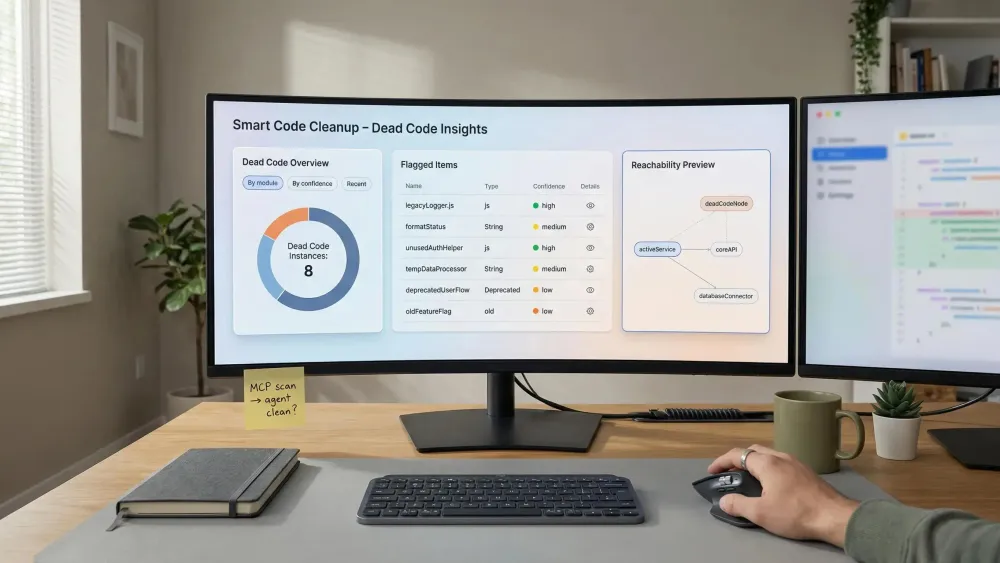
Dead code detection MCP is the process of systematically finding and eliminating unused or unreachable code in your repository using the Model Context Protocol.
It works by making architectural insights instantly available to AI agents and coding tools like Claude Code, Cursor, and Copilot, so agent-driven workflows stay clean and coherent as your team ships fast.
What Is Dead Code Detection MCP and Why Does It Matter?
You want answers, not outdated alerts. Dead code detection with Model Context Protocol (MCP) is how you give your AI agents the truth. It lets you catch and kill unused code fast, at repo scale, without endless static scan reruns or risky LLM hallucinations.
Why should you care? The stakes are high for agent-driven teams:
- Dead code clogs your repo: It increases tech debt, creates maintenance headaches, and invites vulnerabilities you never asked for. In fast AI-driven shops, every line of junk code distracts from your momentum.
- Old tools aren’t enough: Traditional static analyzers forget about agent workflows. They miss cross-module relationships, they don’t sync with codegen cycles, and they rarely surface insights in agent-friendly, queryable formats.
- LLMs get confused: Legacy code and unreachable functions mislead your agents. Results? Slow refactors, broken builds, and false confidence when you ship code that “looks clean.”
- MCP is built for AI-native workflows: It turns dead code status into a first-class, real-time fact inside your stack. Agents and devs can query unused code instantly. You cut anxiety, confusion, and technical debt with real data.
Here at Pharaoh, we lead with raw expertise: our approach fuses dead-code tools, graph intelligence, and seamless repo integration powered by MCP. Call-graph methods used in PyTrim prove that mapping reachability works, especially when you blend static and dynamic data for deeper coverage. In Pharaoh, we connect that power to your agents in real time, using parsing with Tree-sitter and modular knowledge graphs, not guesswork.
Dead code isn’t just annoying. It’s costly, risky, and—if you want truly smart agents—unacceptable.
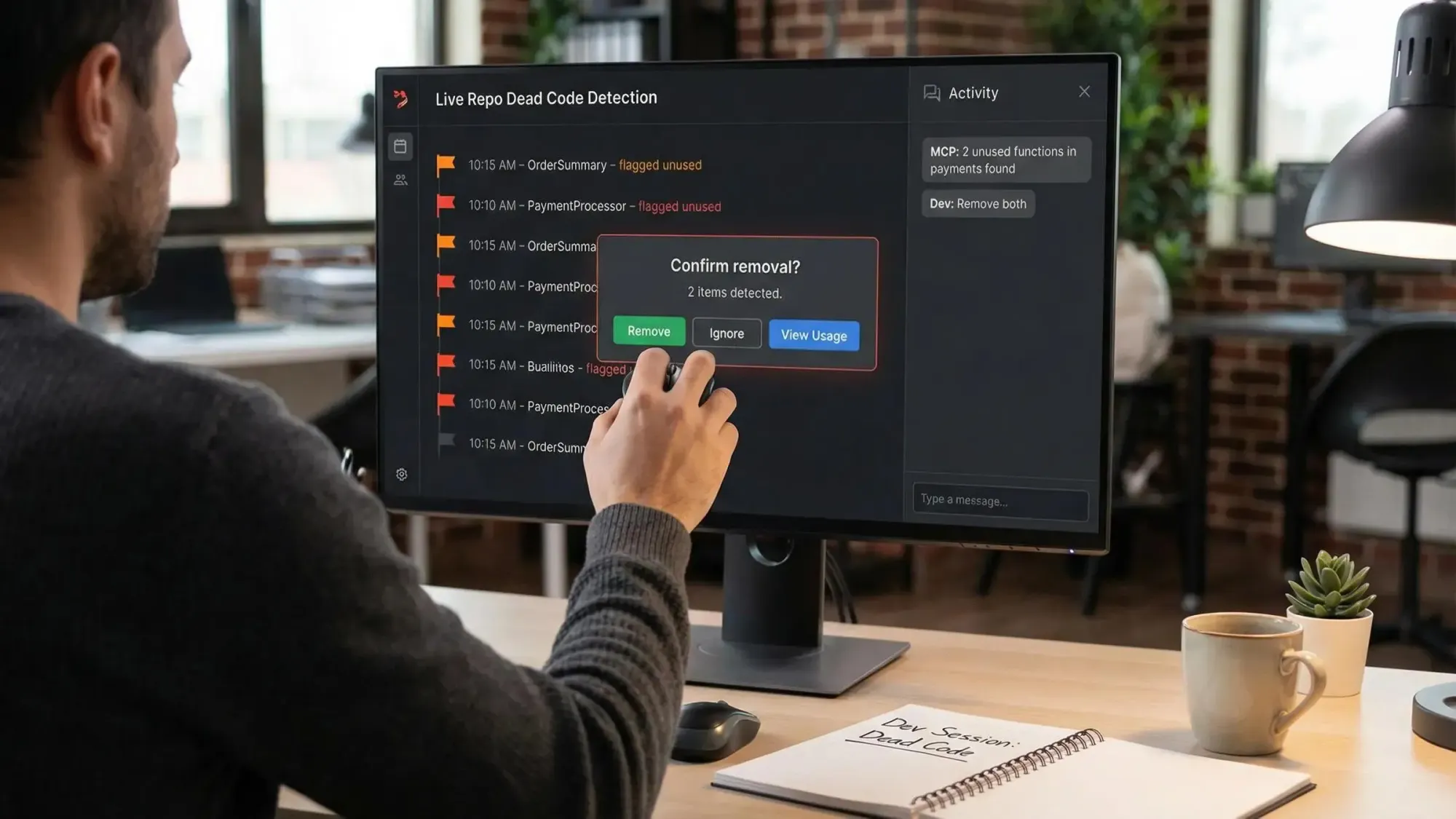
How Does Dead Code Become a Risk for AI-Driven Development?
Agent-driven coding changes how code gets written and what gets left behind. Your tools write utility functions, remake endpoints, or auto-generate test stubs. Suddenly, your repo fills up with fragments—some aren’t used, some never will be.
Risks From Agent-Generated Dead Code
- Duplication spirals: Multiple helpers, utility clones, leftover endpoint handlers across the tree. It gets overwhelming fast.
- Stale logic stays hidden: Agents can call the wrong function, hitting old defaults that break production. Unused fragments trip up LLMs and real devs.
- Confusion in code reviews: AI-generated PRs with orphaned or unreachable code waste reviewer time and open room for silent bugs.
- Refactor risk skyrockets: Dead code masks real blast radius. Without precision, you break things thinking you’re cleaning up.
Dynamic studies show agents will hardcode values or bypass logic to satisfy test scripts—leaving a graveyard of dead branches. Static-only tools miss this. And when dead code slips through, it confuses LLMs and hits accuracy for both gen and security work.
If your AI agent can’t trust what’s reachable, you can’t trust what it writes.
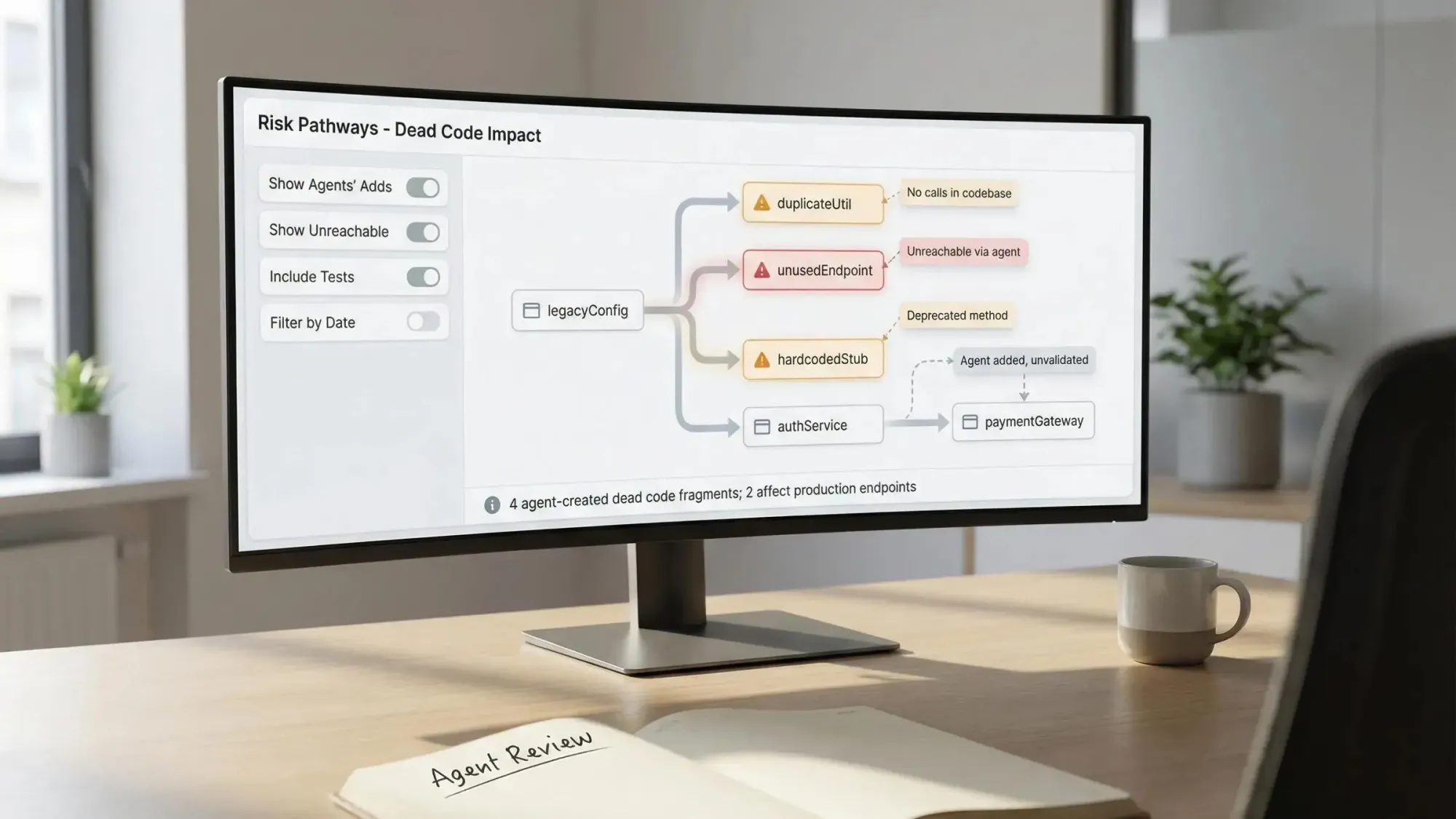
How Does the MCP Approach Transform Dead Code Detection?
Dead code detection MCP doesn’t settle for linter alerts. MCP makes dead code instantly visible, queryable, and actionable for your agents and workflows.
Core Advances MCP Brings
- Live, graph-based analysis: With MCP, dead code status updates in real time. You no longer wait for scheduled jobs or outdated reports.
- True reachability mapping: MCP traces call graphs across entry points—not just “unused function” flags, but all exports, CLI hooks, and endpoints.
- Agent-first workflows: Claude Code, Cursor, PR guards—every agent or process can call MCP endpoints for up-to-the-second dead code facts.
For small teams, this means clarity without extra thinking. Advanced MCP servers use technologies like Tree-sitter for reliable cross-language parsing and drive their insights via graph databases. You tag framework-specific patterns (like React exports), so no valid endpoints get flagged by mistake.
Dead code facts become instant, deterministic building blocks—not stale suggestions or noise.
What Makes Dead Code Detection MCP Accurate and Scalable?
You want accuracy and scale, even in complex monorepos. Dead code detection MCP gets you there because it doesn’t rely on LLMs at query time. Everything comes from deterministic parsing, AST scans, and knowledge graph lookups.
How MCP Achieves Results That Scale
- Deterministic parsing, zero hallucination: Results based on Tree-sitter and Neo4j tech. No LLM token costs. No guesswork, just instant, reliable answers.
- Codebase-wide coverage: Detects unused exports, unreachable logic, and clones across the whole tree—not just within single files.
- Real-time updates: GitHub push triggers a new scan. Your agents always have current data, no lag, no risk from stale indexing.
- Custom whitelists and confidence: You control rules for frameworks, unused code classification, and risk thresholds. Less noise, safer automation.
In Pharaoh, we blend graph-based call tracing with classic static tools like Vulture and Ruff. This means you catch dead code others miss—across entry points, modules, or even ephemeral agent helpers. Proven confidence scoring and framework-aware strategies shrink false positives.
Fast, deterministic facts beat laggy reports or AI guesswork. That’s how you scale dead code detection for real, agent-driven teams.
How Does Dead Code Detection MCP Fit into Agentic Coding Workflows?
Agentic workflows need more than static tools or one-off scripts. You want hand-in-glove integration: dead code facts served to your agents, surfaced before each commit, ready for action during every PR.
This is how real-time dead code intelligence turns into practical wins:
Turning Dead Code Facts into Actions
- Instant, precise queries: Run a “get_unused_code” command right inside Claude Code or Cursor. Agents (and you) see what’s dead, what’s alive, and what’s risky—before a refactor.
- PR Guard in action: Let dead code detection MCP block or flag unreachable exports directly in pull requests. More safety, fewer surprises, faster reviews.
- Seamless repo monitoring: GitHub events trigger auto-refresh. Agents act with real knowledge, not laggy data. It’s hands-off, always up to date.
- Structural awareness tools: Pair dead code detection with function search, blast radius, and reachability queries. Your agents get a whole-architecture view, no context holes.
The Pharaoh stack already connects to GitHub and Claude Code with frictionless setup. Agents call MCP endpoints for dead code as often as needed; everything syncs to source, so they never act on old info.
Fast feedback loops beat context drift. Your repo stays lean. Agent errors and code anxiety drop.
What Are the Differences Between MCP-Based and Traditional Dead Code Tools?
You’ve likely used linters or basic static analyzers. They highlight unused code, but only inside one file or one package. Dead code detection MCP is built for AI-native, repo-wide intelligence—so your agents see the full picture.
Why MCP Beats Old-School Tools
- Infrastructure-first, not just plugins: MCP exposes code intelligence as a service, accessible to agents wherever they work.
- Cross-repo, cross-module scans: Not limited to one file; MCP tracks reachability across your whole monorepo.
- Certainty-based, deterministic answers: You get confidence scores and graph-backed facts, not “maybe this is dead” warnings.
- Zero token costs: All insights, instantly, without LLM inference or extra cloud charges.
Pharaoh shows how this looks in practice—Tree-sitter parsing, Neo4j graphs, and results you can query with zero delays. Confidence scoring, framework-awareness, and one-click integration for core agent tools set it apart.
Old tools leave you guessing. MCP says, “Here’s what you can safely delete, right now.”
How to Integrate Dead Code Detection MCP into Your Stack Quickly?
You already use Claude Code, Cursor, or GitHub Apps. Adding dead code detection MCP should be as easy as clicking a link.
Fastest Path to Better Dead Code Detection
- Install the Pharaoh GitHub App: We power up with read-only mapping, so your code stays secure.
- Connect the MCP endpoint: Paste the provided URL into your agent or IDE settings.
- Run your first scan: Your agent can call for dead code lists, blast radius, and reachability facts in minutes.
- Leverage the free tier: Analyze a repo, try core dead code tools, get actionable insights—no credit card required.
Here’s the best part. Pharaoh’s architecture means you use proven open-source frameworks, advanced parsing, and rich context mapping behind every query. Plus, you get detailed docs, direct support, and community-backed improvements as MCP evolves.
Start small, see big results. Instant insights let you move fast and clean up technical debt before it compounds.
What Can You Expect in the Future of Dead Code Detection MCP?
MCP is moving fast. Support for new languages and frameworks expands every month. More nuanced dead code signals, real-time CI/CD blocking, and automated cleanup are on the roadmap.
We’re bringing runtime traces, deeper confidence scoring, and hot/stale classification—so you’ll know which code is safe to cut and which code might power your top features next release.
Feedback shapes direction. Join the discussion, suggest features, and help make dead code detection even sharper for agentic teams.
Automation rises to meet your needs. You get more control, safer deletes, and a clearer repo as the platform grows.
Conclusion: Level Up Agent Intelligence with Deterministic Dead Code Detection MCP
Your codebase is your product. Every orphaned function, unreachable class, or silent utility slows your team, confuses your AI agents, and builds the kind of technical debt that kills velocity.
Dead code detection MCP removes that drag. We give agent-driven teams the superpower of deterministic, queryable code knowledge—so your agents write safer code, your reviewers catch more risks, and your repo stays fast.
Try Pharaoh’s free tier. See how much lighter, cleaner, and more confident your workflow feels when dead code stops hiding. Empower your agents with facts and ship with full certainty.