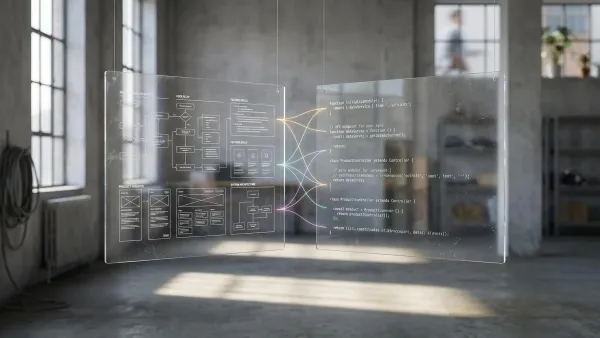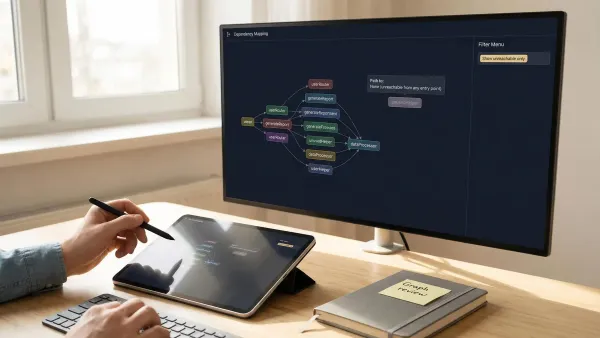
Diagram illustrating how to help LLM understand your codebase structure for better team productivity

Fixing “llm doesn't know my codebase structure” for teams

AI coding tools struggle when they only read files, missing architecture, dependencies, and cross-service links in large repos. It promotes deterministic parsing and knowledge graphs to give LLMs true context and unlock graph-based queries. Pharaoh and MCP enable live, queryable repo graphs that int

Dan Greer · · 7 min read
Diagram highlighting common ai coding assistant blind spots developers should watch for

16 AI Coding Assistant Blind Spots Every Dev Should Know

AI coding assistants that see files in isolation breed architectural drift, duplicates, hidden blast radii, and unsafe suggestions. A structure-first workflow builds a live codebase map with module profiles, blast-radius and reachability graphs, and global function searches; enforces spec-to-code al

Dan Greer · · 8 min read
Visualizing Claude code context window too small issue with code editor open on laptop screen

Claude Code Context Window Too Small: What Can You Do?

Claude code context windows often hit a limit, causing forgotten files, duplicated code, and dropped context during real work. Expanding the window isn’t a fix: code is token-heavy, histories accumulate, and latency and cost rise. The cure is disciplined context: modular sessions, /clear and /compac

Dan Greer · · 8 min read
Abstract visualization showing that AI can't see full codebase, with blurred code fragments on a screen.

AI Can't See Full Codebase? Why It Happens and Fixes

AI tools can only see fragments of a codebase due to context limits and no system-wide view, causing duplicate utilities, broken callers, and hidden dependencies. Pharaoh turns TS/Python into a live Neo4j knowledge graph (Tree-sitter) and exposes it to AI tools via MCP, enabling blast-radius, reacha

Dan Greer · · 7 min read
Robotic arm playing chess with a human, illustrating stop AI from rewriting existing code concept

How to Stop AI From Rewriting Existing Code in Your Repo

The article argues that AI coding tools often rewrite or duplicate code because they only see partial context and misinterpret intent. Linearly reading files, missing architecture, and vague prompts cause regressions, dead code, and hidden dependencies. It advocates using knowledge graphs to map mod

Dan Greer · · 8 min read
AI creates duplicate code with highlighted error messages on a computer screen

AI Creates Duplicate Code: Why It Happens and Solutions

AI tools often duplicate code because they only see local files, not the whole project, creating maintenance headaches for small teams. The article argues for architectural awareness—giving AI access to the entire codebase to reuse canonical logic. It highlights Pharaoh, a knowledge graph that maps

Dan Greer · · 8 min read
AI refactoring breaks other code illustration showing broken chains between software modules

AI Refactoring Breaks Other Code: Causes and Solutions

AI refactoring often breaks other code by editing one file at a time, duplicating utilities, or changing signatures without full dependency context. Without a live map of modules and calls, cross-module breakages slip into production. Blueprint-driven refactoring maps the repo into a knowledge graph

Dan Greer · · 8 min read
Diagram showing code blocks merging to prevent duplicate functions in AI coding workflows

How to Prevent Duplicate Functions in AI Coding Workflows

AI coding often re-creates similar logic under different names because tools lack global architectural context, creating semantic duplicates. The guide promotes mapping the repo into a live knowledge graph (Pharaoh) to reveal structure, surface duplicates early, and give agents reliable context. It

Dan Greer · · 8 min read
AI coding tool writes redundant functions in code editor, highlighting inefficiency concerns

AI Coding Tool Writes Redundant Functions: What to Do?

AI coding tools often generate redundant functions because they lack a holistic view of the repo. This duplication burden especially harms small teams through more reviews, tests gaps, and regression risk. A knowledge-graph approach (Pharaoh) maps code into a Neo4j graph, surfacing canonical utiliti

Dan Greer · · 7 min read
Frustrated developer facing errors because Claude code doesn't understand codebase

Fix When claude code doesn't understand codebase

AI coding tools like Claude Code struggle with codebase context due to limited memory and no persistent map, causing duplicate logic and missed dependencies. The article advocates a persistent knowledge graph that encodes modules, dependencies, and endpoints to enable blast-radius analysis and dead-

Dan Greer · · 9 min read