Claude Code
How much of your codebase does Claude actually need?
Native search, repository packs and structural queries solve different parts of the same problem. The task matters more than the amount of code you can fit in a prompt.
Native search, repository packs and structural queries solve different parts of the same problem. The task matters more than the amount of code you can fit in a prompt.
A reproducible missing-wiring example: the unit test succeeds before and after the fix, while the application's output changes only after a production caller is connected.
A small permission check reaches a web app, shared packages and an API. Here is how I investigate that change, with the measurements and grading mistake included.

Recorded API spend fell from 17.0¢ to 5.9¢ per relationship question on my own repository, a subset of the broader 182-session experiment.
Use code search, docs, database schemas, Git history, and code graphs, then check the evidence before your AI assistant edits.

Choose among Mermaid, Structurizr, PlantUML, Graphviz, Lucidchart, Visio and Enterprise Architect, with examples you can edit.
Build a server in an existing project, inspect the calls it receives, reproduce failures from a terminal, and check what a repository change touches before letting an AI assistant edit it

Before an AI edit, trace callers, inspect their contracts, check hidden wiring, choose tests, and record what remains uncertain.

Compare tools that recover dependencies from code, find the inputs each one needs, then test a real module and inspect the evidence in a repository you already know well before trusting the map

Choose a graph, trace imports, follow consumers, check tasks, inspect callers, and give your AI assistant a test plan tied to the change.

Start Claude in the package you're changing, even in a monorepo, keep generated files out, check outside callers, and, when exploration grows, use subagents.

Trace callers, inspect contracts, check tests, assess reversibility, and plan an AI edit, using a real cal.diy report.

Build an import graph, check its scope, find callers, follow the change, compare behavior, and record the gaps before merging.

Check package boundaries, layer rules, dependency cycles, drift, hotspots, and change impact, with a rule you can run.
Before a refactor, load the rules, inspect the code, trace callers, choose checks, and preserve the evidence for review.

Before an AI edit, inspect modules, follow callers, check dependencies, and compare the map with source, using a real repository example.

Cody's small-team plans ended, but your team can keep its editor, operate code search, try a terminal agent, or add graph context, depending on the job.

Inspect instructions, history, files, tool definitions, results, free space, compaction, and model choice before your next edit.

Compare graph servers, code search, repo maps, context packers, language support, and how each stays current.
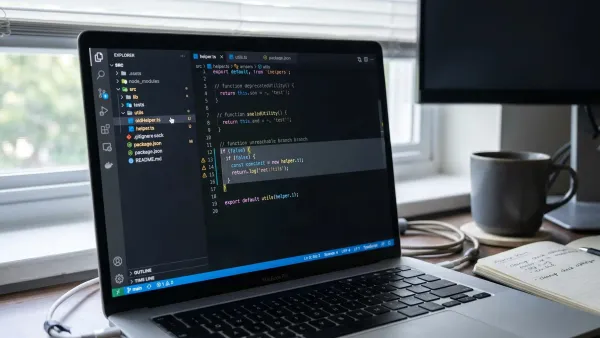
An unread value can be removable while the call that produced it still matters, and five examples plus real detection output show what to check before you delete a function

Four MCP servers for Claude Code, with install commands, scope choices, and a way to check what they add to context.

Configure Cursor for a large repo, check search scope, open related packages, add rules, trace callers, and review a bounded refactor before merging.

Find existing logic, inspect callers, test production wiring, and document deliberate shortcuts before merging AI-assisted changes into a shared repository

Define standards, choose repeatable checks, inspect repository context, and keep a review log so an AI-assisted change comes with evidence you can examine before you decide to merge it

Check existing helpers and callers before editing. Then inspect the patch, trace its entry point, test the behavior, and record what you checked.

Use Tree-sitter queries to extract functions, imports and calls from TypeScript and Python, then check what the parser can actually tell your agent

How a code graph connects functions, files, callers, cron jobs, modules, and endpoints, with real output and limits.

Follow a tool call from your assistant to an MCP server, connect one in Claude Code, inspect a real result, and check its repository before you request a code change

Compare AI code review tools by context, review workflow, delivery, and limits, then test them on your code with a trial, an agent prompt, and a PR checklist.

Thirteen options for docs, code, browsers, databases, and team context, with setup commands and the limits to check first.

A map of codebase intelligence tools, from code search and AI review to code graphs, then seven code-graph tools compared, including when a free local setup covers the job.

Compare 15 tools against Greptile's current features to find a replacement for your review workflow, security checks or questions about repository connections on your team before you make the switch

Use a billing-reminder example to check the PRD, inspect the current code, review an AI build, and record what still needs a decision

Audit code AI has written, find duplicate logic, inspect unused exports, trace cycles, review security findings, and compare architecture.
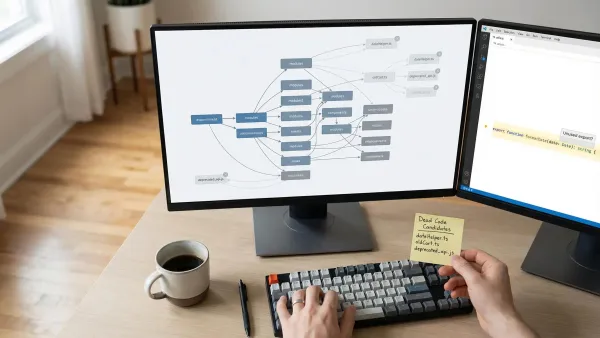
Run Knip, inspect a real report, configure workspaces, trace export consumers, check import side effects, and put a reviewed check in CI.
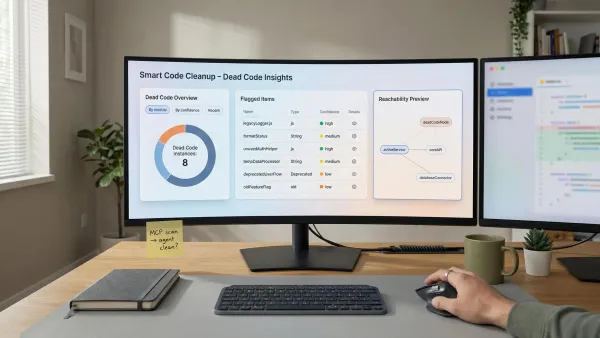
Before your agent deletes TypeScript or Python code, check the branch, read the evidence, inspect references, run tests, and review the patch.

Find the function before you write another. Compare local text, declaration patterns, hosted symbols, and agent searches across eight tools.

Give agents the files, rules, call sites, entry points, checks, and revision details a task needs without turning every request into a repository tour.

Find existing helpers before an AI edit with a lookup prompt, a review artifact, real search output, and a clone scan you can run on your own repository

Check the instructions Claude loaded, ask for evidence before edits, and choose context that fits the task.